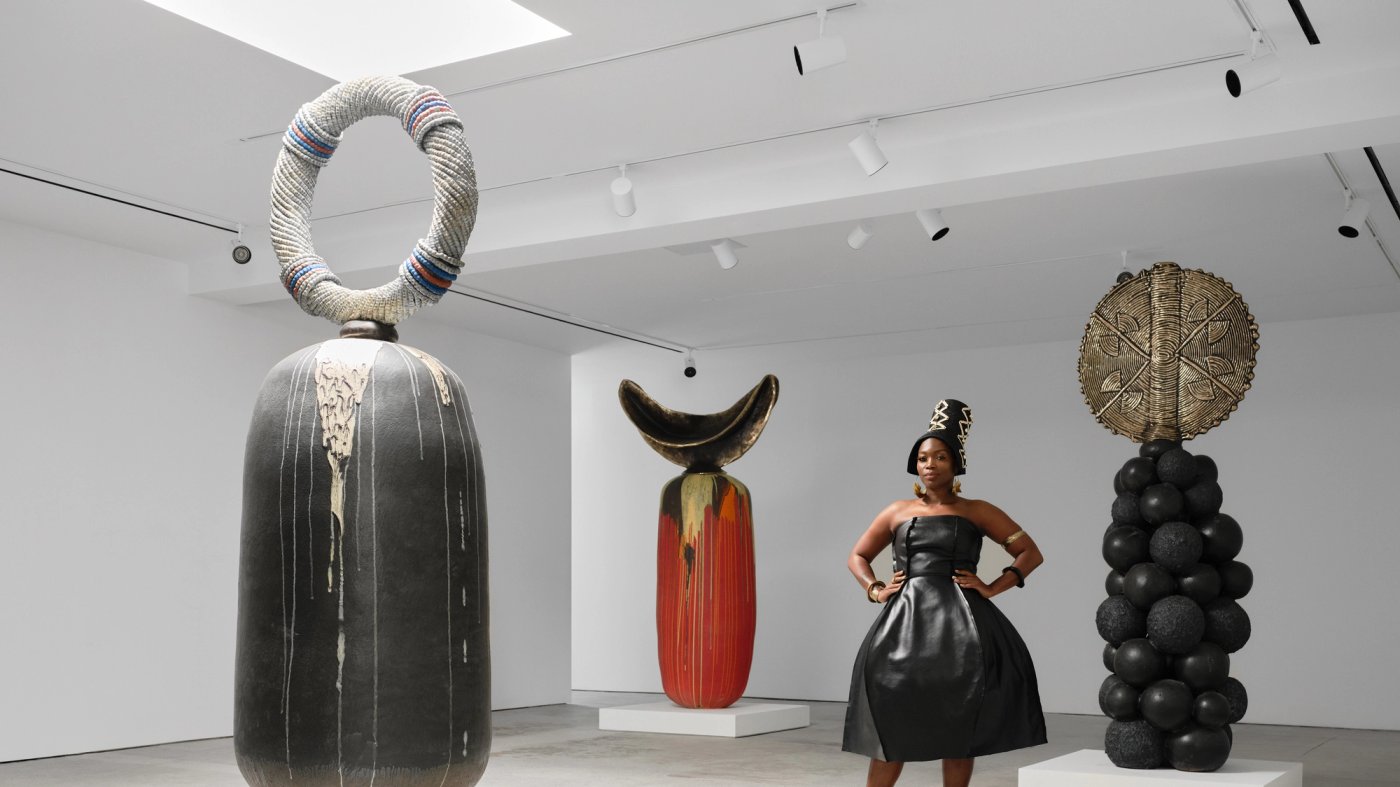
An image can catch the eye before its caption is read. Colour and scale do their work quickly. A title, a material or a name can then change what is being seen.
Zizipho Poswa’s sculpture offers a compelling reason to spend time with that second encounter.
Southern Guild describes her ceramic and bronze work in relation to her Xhosa heritage and the roles of women. Her 2023 bronze series iiNtsika zeSizwe, shown at Galerie56 in New York, drew on umthwalo, the practice of carrying loads on the head.
Source: Southern Guild, Zizipho Poswa artist biography ↗A sculptural form balanced above a base can first be read through proportion, weight or movement. Knowing that context opens another way into it. The physical act has a history; the gesture carries associations beyond its outline.
The work reaches different rooms and different audiences. Some viewers will recognise a reference immediately. Others will meet it through an exhibition text. A photograph might circulate further still, separated from the words that first accompanied it.
That movement raises questions about the way we share things we find beautiful. Which details travel with the image? Do we retain the artist’s name? Do we make it possible to follow the work back to its source?
A caption cannot contain a whole practice. It can leave a door open.
This is one reason to resist treating a continent, a tradition or a material as a ready-made visual category. There is a person making choices within it. Naming that person gives the viewer somewhere more specific to go.
Following a work beyond the first image can be its own pleasure. The form remains. The encounter grows.